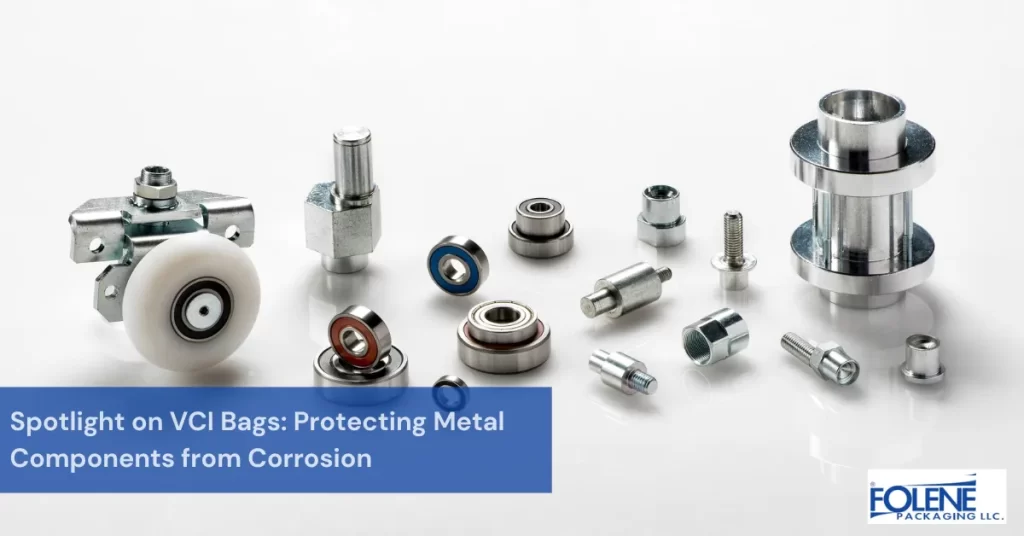
What are VCI Bags?
VCI bags are specialized packaging materials specially designed to prevent corrosion of metal components. VCI stands for:
volatile corrosion inhibitor
vapor corrosion inhibitor
vapor phase corrosion inhibitor
Thick gauge plastic sheets or bags are infused with VCI chemicals, which emit a protective vapor that envelops the surface of the metal parts with minuscule VCI molecules that keep rust and corrosion damage at bay. VCI bags are an excellent way to transport metal parts safely while protecting them from rust and corrosion damage.

Benefits and Features of VCI Bags
VCI bags offer safe and effective protection against corrosion damage and are suitable for a broad industry range, from automotive parts packaging to handheld electronic devices and heavy machinery parts. VCI poly bags are generally available in different sizes, closures, and metal-specific formations to accommodate a varied spectrum of metal parts you may need to package. Some options include:
gusseted VCI bags for packaging large bulky items that need lots of space
flat VCI bags in various sizes and thicknesses for long-term storage
zip locking VCI bags for short-term storage, and easy repeated access
ferrous metal formulations with VCIs specific to protecting iron and cast iron from rust
multimetal formulations, with more generic VCIs to protect generic metals from corrosion.
VCI bags are simple to use, require no special equipment, and provide comprehensive protection against various corrosive elements. Alternatives to VCI bags include VCI films, like ICT 510 C VCI film, which offers cost-effective and versatile protection against rust and corrosion damage for metal assets.

Choosing and Using VCI Bags
When choosing VCI bags, there are several considerations that should direct your choice of VCI bags or products. Here are a few of the main points to determine:
Consider the type of metal being protected. Ferrous metals, cast iron, and other metal items can be protected with VCI bags. Does this type of metal require a specialized chemical formulation?
Consider the size and shape of the item: will a standard sized VCI bag fit the item well, or would VCI sheets, rolls, or tubing provide more flexibility?
What is the metal components application? This can help determine the level of protection needed. For example, highly sensitive metal nanochips for electronic devices will need more protection than a shipment of extra screws for a hardware store.
What is the biggest protection concern? Will the item be in long term storage? Transported via air, ship or ground? VCI bags can be used to protect metal parts during storage, shipping, or transit, but be sure to check the technical data sheet to verify compatibility with your use case.
What sealing equipment do you have available? If you have heat sealing equipment, then flat VCI bags can be a good cost effective option. If not, you will also need to invest in sealing tapes, twist ties, or zip locking VCI bags to ensure an impervious seal.
Best Practices for Corrosion Prevention

The main purpose of VCI bags is to prevent corrosion damage for metal components. Here are some best practices to aid optimal corrosion protection:
Use VCI bags or sheets to prevent corrosion on metal components during storage or transit.
Only place clean, dry metal components into VCI bags. Wet or dirty metal can interfere with the VCI chemical properties and cause corrosion.
Always use gloves when handling VCI products both to protect skin from chemical damage and to prevent skin oils from transferring to and inhibiting VCI bag properties.
Ensure the VCI bag is properly sealed to prevent moisture and contaminants from entering. External substances can interfere with the VCI chemical’s effectiveness and can cause corrosion.
Store VCI bags in a dry, cool place to maintain their effectiveness.
Use VCI bags in conjunction with other corrosion prevention methods for maximum protection.
Regularly inspect VCI bags for signs of wear, damage, or expiration. VCI bags generally have a 5-year storage life and should be switched out if needed for longer-term storage to maintain maximum corrosion protection.
Use FDA/USDA compliant VCI bags for any metal products that may come in contact with food to maintain food safety and regulatory compliance.
Following these best practices can help ensure a successful metal packaging experience.

VCI Bag Alternatives from Folene Packaging
VCI bags are highly effective at keeping corrosion at bay, but they are costly, especially in large quantities. Companies who evaluate their corrosion protection needs may determine that a thick, strong film to keep out moisture is all they need without spending extra money on VCI chemical protection.
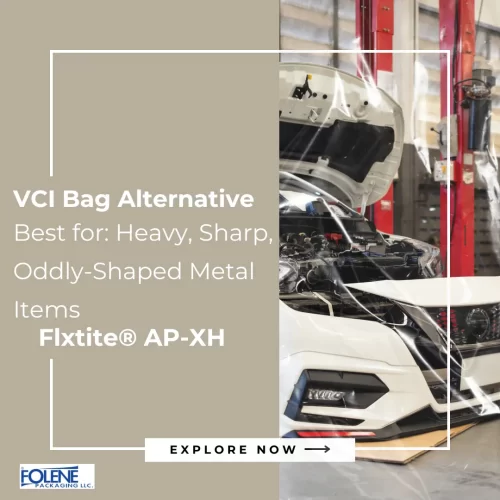
Folene Packaging offers high-performance, heavy-duty shrink films specially designed for heavy objects, such as car parts, machinery, tools, and equipment. While they do not have VCI chemical properties, our quality films are an excellent alternative for packaging items that need physical protection in transit and storage. However, they can be effectively maintained without the additional VCI chemical safeguards. Speak to a Folene Packaging expert today to determine if Flxtite® AP-XH film is better suited to your needs than VCI bags.
Are VCI Bags Right for Your Products? In Conclusion
VCI bags are an effective and versatile solution for protecting metal components from corrosion. By understanding how VCI bags work and choosing the right type for your needs, you can ensure the integrity of your metal products. However, VCI products can be costly at quantity, so it’s important to evaluate your corrosion protection needs and consider more cost-effective alternatives.