Packaging frozen food properly plays a critical role in preserving the quality, safety, and appeal of frozen products from the moment they leave production lines to when they reach consumers’ freezers. As the frozen food industry continues to grow globally, driven by consumer demand for convenience, longer shelf life, and a diverse range of ready-to-eat meals, frozen food packaging solutions are now more crucial than ever. The packaging must meet a unique set of rigorous requirements and address important factors such as temperature resistance, product protection, and environmental impact.
Unlike packaging for fresh or shelf-stable foods, frozen food packaging must withstand harsh cold temperatures, prevent moisture loss and freezer burn by using materials designed to prevent air from entering, maintain seal integrity, and often provide clear product visibility in the freezer aisle—all while balancing cost, sustainability, and the reputation of a business.
Packaging choices also have a significant impact on the environment, especially when considering the use of plastic and the need for more eco-friendly alternatives. Ongoing innovation in packaging materials and technologies, such as advanced shrink films, is helping brands address these challenges effectively. The ability to produce custom packaging on the production line, including options compatible with form-fill-seal machines for efficient fill processes, is essential for meeting the needs of a wide range of products. In this article, we explore the ten unique demands of frozen food packaging and how shrink packaging film, especially cutting-edge solutions like Folene Packaging’s AP-XF, meets these challenges to ensure frozen foods remain fresh, protected, and appealing from freezer to table.
Introduction to Frozen Food Packaging
Frozen food packaging is a cornerstone of the modern food industry, ensuring that products like frozen pizza, vegetables, and ready-to-eat meals reach consumers in peak condition. As demand for convenient meal solutions continues to rise, the need for packaging that can withstand cold temperatures and protect food quality has never been greater. Flexible packaging options, such as stand-up pouches and bags, have become increasingly popular for many frozen foods due to their moisture-resistant properties and ability to maintain product integrity in the freezer. These packaging solutions are specifically engineered to prevent freezer burn, lock in flavor, and preserve the texture of frozen foods, making them an essential component in delivering high-quality, great-tasting products to consumers’ tables.
What are the most pressing issues in packaging frozen food?
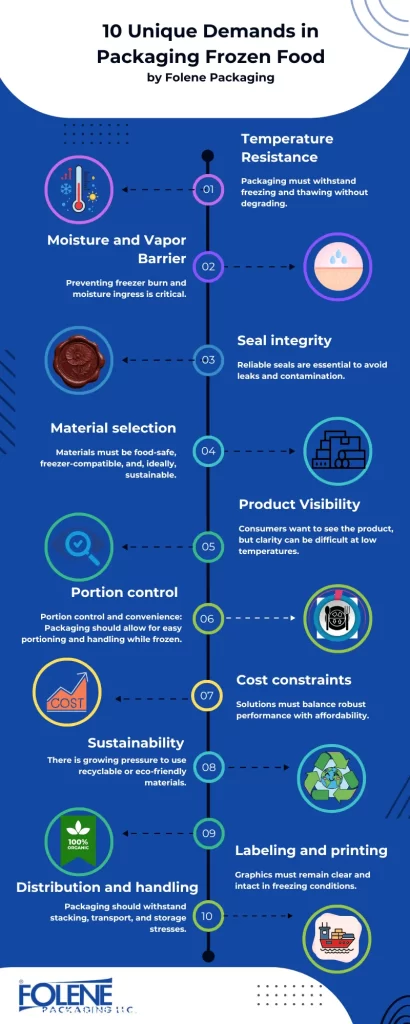
Here are 10 most pressing packaging issues specific to the frozen food sector. We’ll discuss how each challenge
1. Temperature resistance: Packaging must withstand freezing and thawing without degrading.
2. Moisture and vapor barrier: Preventing freezer burn and moisture ingress is critical.
3. Seal integrity: Reliable seals are essential to avoid leaks and contamination.
4. Material selection: Materials must be food-safe, freezer-compatible, and, ideally, sustainable.
5. Product visibility: Consumers want to see the product, but clarity can be difficult at low temperatures.
6. Portion control and convenience: Packaging should allow for easy portioning and handling while frozen.
7. Cost constraints: Solutions must balance robust performance with affordability.
8. Sustainability: There is growing pressure to use recyclable or eco-friendly materials.
9. Labeling and printing: Graphics must remain clear and intact in freezing conditions.
10. Distribution and handling: Packaging should withstand stacking, transport, and storage stresses.
Shrink packaging film, particularly advanced solutions like Folene Packaging’s AP-XF, has emerged as a versatile and effective option to address these demands. Below, we explore how shrink packaging film helps meet each challenge:
Temperature Resistance:
Shrink packaging films are designed to remain flexible and resilient at freezing temperatures. AP-XF, for example, is specially formulated to resist brittleness and cracking, ensuring the package maintains its integrity throughout the cold chain.Moisture and Vapor Barrier:
High-quality shrink films provide excellent moisture and vapor barriers. This minimizes the risk of freezer burn and preserves food quality by preventing dehydration and the ingress of unwanted moisture.Seal Integrity:
Shrink film creates a tight, secure seal around products, protecting them from leaks and contamination. The consistent sealing performance of films like AP-XF is critical for maintaining product safety and shelf life in frozen environments.Material Selection:
Modern shrink films are manufactured from food-grade, freezer-compatible materials. Many are engineered to balance performance with sustainability, offering thinner gauges without sacrificing strength or protection.Product Visibility:
Consumer demand for product visibility is high in the frozen food aisle. Folene Packaging’s AP-XF film is specially formulated to maintain excellent clarity, even in low and freezing temperatures, allowing consumers to see the product while still providing robust protection.Portion Control and Convenience:
Shrink packaging can be custom-fitted to single servings or multi-packs, offering portion control and easy handling. Its contour-fitting nature makes it easy to identify and separate frozen items, improving consumer convenience.Cost Constraints:
Shrink films are often more cost-effective than rigid packaging alternatives. Their lightweight and space-saving properties reduce shipping and storage costs while providing the necessary protection for frozen foods.Sustainability:
Many shrink films are now produced with recyclability in mind, and their thin profile means less material is used overall. Innovations in formulations, such as those used in AP-XF, strive to balance environmental responsibility with the demanding requirements of frozen food packaging.Labeling and Printing:
Shrink films are compatible with advanced printing and labeling technologies that withstand freezing conditions. Graphics and information remain clear and intact throughout the product’s lifecycle.Distribution and Handling:
The durability and puncture resistance of shrink packaging film make it ideal for the rigors of transport and storage. The snug fit of AP-XF film reduces shifting and damage during distribution, protecting the product until it reaches the consumer.
Packaging Materials and Sustainability
The selection of packaging materials is a critical decision in frozen food packaging, directly influencing both product quality and environmental impact. Today, many brands are turning to recyclable packaging materials like polyethylene and polypropylene, which not only help maintain the safety and freshness of frozen foods but also support efforts to reduce carbon footprint. Fully recyclable packaging solutions are gaining traction as companies strive to promote a circular economy and minimize waste. In addition, the adoption of sustainable packaging materials—such as biodegradable plastics and plant-based alternatives—reflects a growing consumer preference for environmentally friendly options. By choosing high-quality, recyclable, and sustainable materials, brands can ensure their frozen food packaging meets both performance standards and the expectations of eco-conscious consumers.
E-commerce and Wholesale Packaging Solutions
The rapid growth of e-commerce has transformed the way frozen foods are packaged and distributed. Brands now require packaging solutions that can endure the challenges of shipping and handling, from the warehouse to the consumer’s doorstep. Wholesale packaging strategies, such as bulk packaging and palletizing, offer efficient and cost-effective ways to transport large quantities of frozen foods while maintaining product safety. Customizable packaging options allow brands to tailor materials, sizes, and designs to their specific needs, ensuring that every shipment arrives intact and ready for sale. By investing in robust, adaptable packaging materials, companies can confidently meet the demands of both e-commerce and wholesale distribution channels.
Regulatory Compliance and Safety
Ensuring regulatory compliance and product safety is paramount in frozen food packaging. Packaging materials must adhere to stringent safety standards, including being heat-sealed and moisture-resistant, to protect against contamination and spoilage. Effective packaging also prevents air from entering containers, which is crucial for avoiding freezer burn and preserving food quality. In addition to material performance, brands must comply with labeling and packaging regulations to guarantee that their products meet all legal and safety requirements. By prioritizing compliance and safety in their packaging strategies, brands can deliver frozen foods that are not only high in quality but also safe and trustworthy for consumers.
Conclusion
Shrink packaging film, and particularly formulations like Folene Packaging’s AP-XF, offer a comprehensive solution to the unique challenges of frozen food packaging. With features like superior clarity at low temperatures, strong seals, and enhanced moisture barriers, shrink film ensures products stay safe, fresh, and appealing from freezer to table.