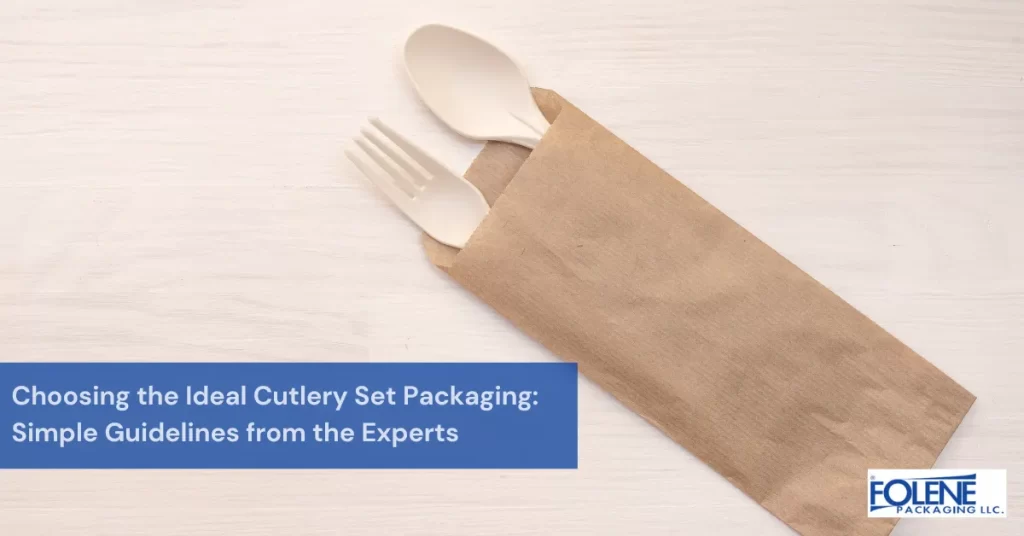
When packaging disposable cutlery sets, businesses face a wide range of options, each with its own advantages and drawbacks. The right choice ideally balances cost, sustainability, brand image, and customer experience. Folene Packaging explores some popular cutlery set packaging ideas and dissects the details to help your company make an informed decision.
Considerations for Cutlery Sets
Before we delve into the packaging, let’s take a moment to discuss the cutlery sets themselves. As consumer demand for sustainability grows, businesses across sectors are having to adapt their product lines to meet higher eco-conscious standards. Particularly as EPR regulations are increasingly adopted, passing the waste management costs of disposables onto manufacturers, businesses are taking biodegradable options more seriously.
Compostable Cutlery
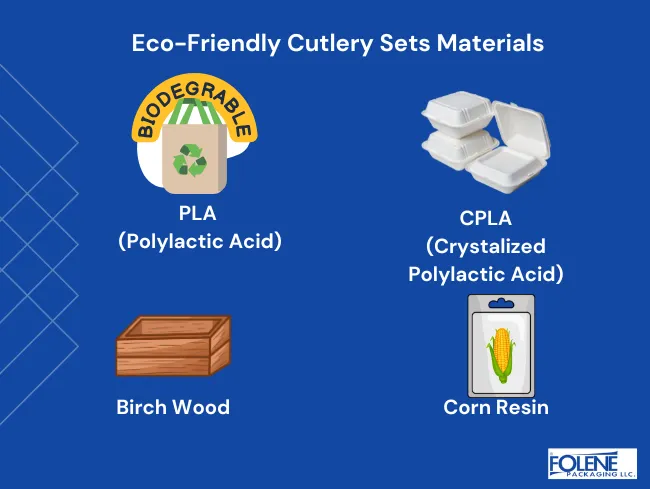
Compostable cutlery is typically made from renewable resources such as cornstarch, sugarcane, or PLA and should carry certifications from organizations such as OK Compost, BPI, or EN 13432. These certifications ensure that your cutlery sets are truly compostable and meet recognized sustainability standards, making them a responsible choice for businesses committed to reducing their environmental impact.
However, when selecting compostable cutlery sets for your business, it’s important to look beyond just the eco-friendly label and consider how the product will perform in real-world settings. Durability is key, especially when it comes to cutlery. Your compostable cutlery sets need to be sturdy enough to handle a variety of meals, from light salads to hearty entrees, without bending or breaking. This is especially important for restaurants, catering companies, and events where customer experience and reliability are paramount. Choosing cutlery that is both durable and compostable ensures that you don’t have to compromise on quality while supporting the environment.
Cost-effectiveness is another essential consideration. True, compostable cutlery sets have a higher upfront cost than traditional plastic; many businesses find that the long-term benefits, such as enhanced brand reputation and customer loyalty, make them a smart investment. Bulk ordering options and minimalist packaging can help keep costs manageable, making these sets suitable for e-commerce platforms, supermarkets, and foodservice providers of all sizes.
Customization can set your business apart. Many suppliers offer the ability to customize your compostable cutlery sets with branded packaging, printed logos, or even adjusted sets that include specific items like napkins, salt, or pepper packets. This not only reinforces your brand identity but also allows you to tailor the product to your customers’ needs, whether you’re serving quick meals or upscale dining experiences.
The packaging itself should be designed to protect the cutlery during shipping and storage, ensuring that each set arrives in perfect condition. Opt for packaging that is also recyclable or compostable to minimize your environmental footprint further. Efficient, protective packaging is essential for businesses shipping products via e-commerce platforms or supplying large-scale events.
Don’t overlook the value of customer feedback. Reading reviews and product ratings can provide insight into the real-world performance of compostable cutlery sets, helping you choose products that consistently meet expectations for durability, convenience, and sustainability.
Ultimately, the ideal compostable cutlery set is one that aligns with your business’s operational needs, sustainability goals, and brand values. By considering factors such as certification, durability, cost, customization, and packaging, you can select a product that not only supports the environment but also delivers a positive customer experience. For more information or to discuss custom options, reach out to your supplier by email or through their website—making the switch to compostable cutlery sets is a step toward a more sustainable future for your business and the planet.
Cutlery Set Packaging Options
Plastic Wrapping
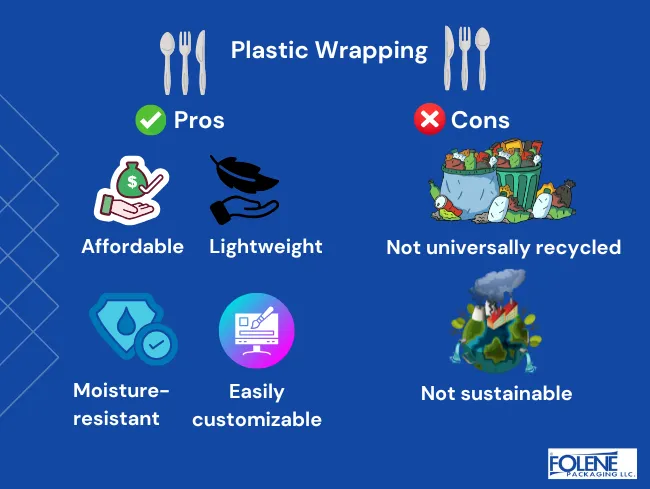
Plastic wrapping, traditionally a common choice for disposable cutlery, involves sealing each set or individual item in a plastic pouch or film.
Pros: Plastic is highly effective at protecting cutlery from moisture and contaminants. It is affordable, lightweight, and easy to customize with branding or instructions.
Cons: The environmental impact is significant. Most conventional plastics are not biodegradable and may not be recyclable in all regions, which can deter eco-conscious customers and conflict with company sustainability goals. Choosing recyclable or biodegradable plastics can be a highly effective solution.
Paper Wrapping
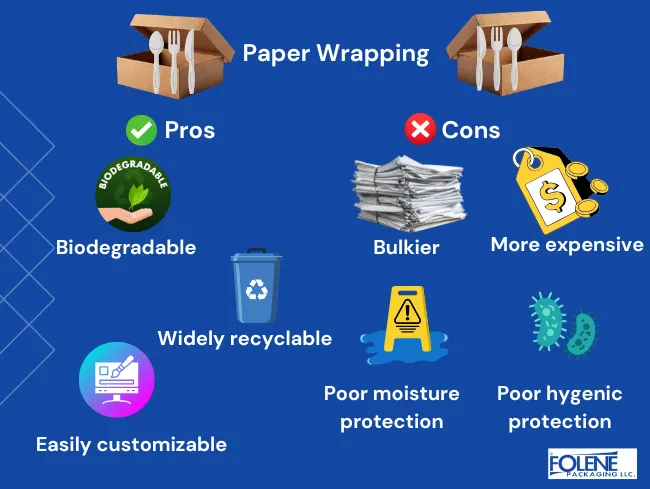
Paper sleeves or pouches offer a more eco-friendly alternative to plastic, wrapping the cutlery in recyclable or compostable material.
Pros: Paper is biodegradable and widely recyclable, enhancing a brand’s green credentials. It also offers ample space for printing logos or messages.
Cons: Paper is less moisture-resistant and can be more expensive than basic plastics. It may not provide the same level of hygiene protection, especially in damp or greasy environments.
Compostable/Biodegradable Film
This option uses plant-based materials, such as PLA or CPLA, to create protective films.
Pros: Compostable films are attractive to environmentally conscious consumers and align well with sustainability initiatives. They often meet commercial composting standards.
Cons: Such materials are generally more expensive and may have specific storage requirements to prevent premature degradation. Their effectiveness and availability can vary by region.

Cardboard Boxes or Cartons
Some brands use small cardboard boxes or cartons to package cutlery sets.
Pros: Sturdy and protective, these boxes can be efficiently stacked and easily customized with branding. They provide a premium feel.
Cons: Cardboard is bulkier, increasing shipping and storage costs. It also uses more material, which can generate additional waste if not recycled.
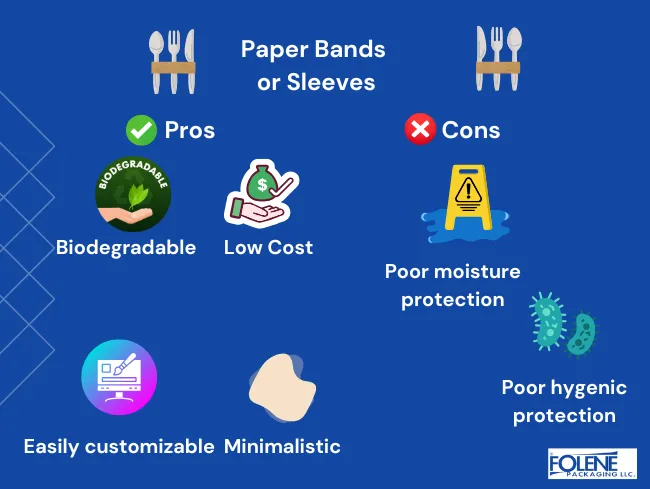
Paper Bands or Sleeves
A minimalist approach, paper bands or sleeves simply hold the cutlery together without full wrapping.
Pros: This uses minimal material, reducing waste and cost. It’s easy to brand and appeals to customers seeking simplicity.
Cons: Provides limited protection and hygiene, making it less suitable for environments that demand strict cleanliness.
Reusable or Returnable Containers
While less common for disposable cutlery, some systems use durable containers designed for multiple uses.
Pros: Dramatically reduces waste and fits into sustainability programs.
Cons: High upfront costs and logistical challenges of collecting and sanitizing containers make this impractical for most disposable applications.
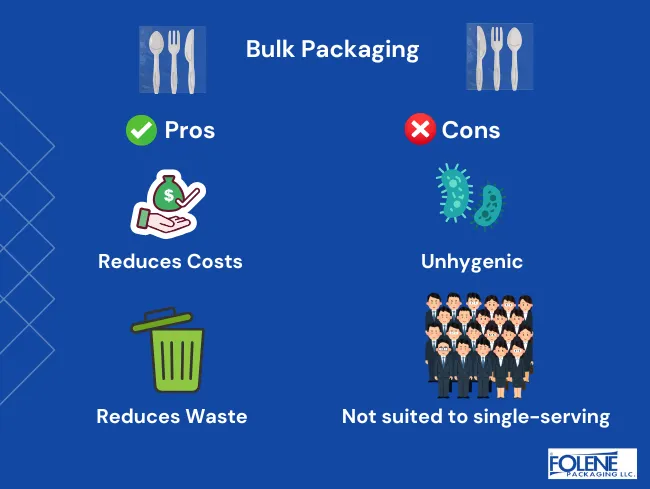
Bulk Packaging
Some businesses opt to package cutlery in bulk, allowing customers to take what they need.
Pros: This reduces packaging waste and significantly lowers costs.
Cons: Bulk packaging provides the least hygiene, making it unsuitable for many foodservice or retail settings.
Why Shrink Packaging Film Is the Smart Choice
Among these options, shrink packaging film emerges as one of the most cost-efficient and practically effective solutions. Shrink film tightly seals each cutlery set, offering excellent barrier protection against moisture, dirt, and germs. It is compact, enabling efficient shipping and storage, and highly customizable for branding.
Historically, shrink film was criticized for its environmental impact. However, innovations from companies like Folene Packaging have changed the landscape. Folene Packaging now offers shrink packaging film that is both 100% recyclable and biodegradable. This means businesses no longer have to compromise between cost, practicality, and sustainability. Shrink film from Folene Packaging delivers:
Low material and shipping costs due to its thin, lightweight profile.
Superior hygiene and protection for each set.
Sustainable options that are fully recyclable and biodegradable, supporting green initiatives without sacrificing performance or budget.
Conclusion
The ideal packaging for disposable cutlery balances protection, presentation, cost, and environmental impact. While each option has its merits, shrink packaging film—especially the recyclable and biodegradable options from Folene Packaging—stands out as the most practical, cost-effective, and sustainable solution for modern businesses.