Understanding the Mass Balance Approach for Sustainable Practices
What is the Mass Balance Approach?
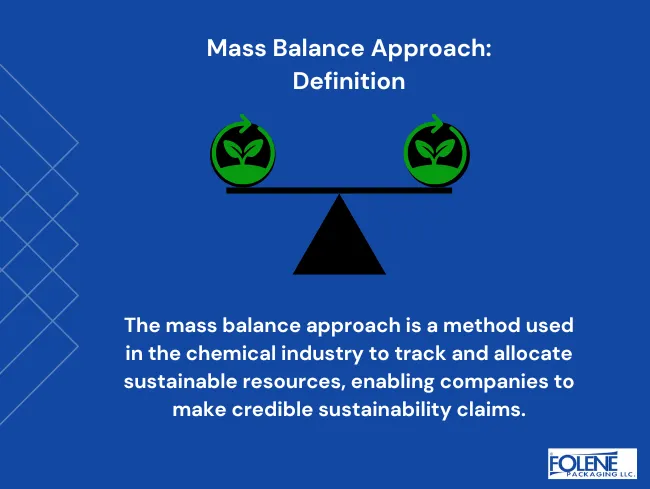
The mass balance approach is a method used in the chemical industry to track and allocate sustainable resources, enabling companies to make credible sustainability claims. By incorporating renewable energy and sustainable feedstocks, this approach reduces reliance on fossil feedstocks and supports the transition to a more circular economy. It is particularly valuable in scenarios where separate production lines for sustainable materials are not feasible, allowing chemical companies to allocate bio-based and recycled feedstock to finished goods through auditable bookkeeping and transparent reporting.
This method not only helps reduce the carbon footprint of chemical production but also drives innovation by supporting the development of new, more sustainable products. Certification schemes, such as the ISCC system, provide third-party verification to ensure the integrity of the mass balance chain throughout the entire supply chain, guaranteeing appropriate allocation and preventing over-allocation beyond the original input. By adopting the mass balance approach, companies contribute to sustainable sourcing strategies, promote the use of bio-based materials, and facilitate chemical recycling, all of which are essential components of a circular economy and a more sustainable future.
The Chemical Industry and Mass Balance
The chemical industry is a significant user of fossil resources, but the mass balance approach offers a practical solution to reduce this reliance by incorporating bio-based feedstock into production processes. By using the mass balance method, chemical companies can allocate sustainable materials, such as bio-based and recycled feedstock, to finished products, enabling credible sustainability claims and supporting sustainable sourcing strategies. This approach not only helps reduce the carbon footprint of chemical production but also drives innovation by fostering the development of new, more sustainable products.
Through auditable bookkeeping and transparent reporting, the mass balance approach ensures the appropriate allocation of sustainable materials throughout the entire supply chain, preventing over-allocation beyond the original input. Ultimately, adopting this method contributes to a more circular economy by promoting the use of renewable feedstock, chemical recycling, and bio-based materials, allowing the chemical industry to make more informed decisions about input materials and reduce its environmental impact while supporting sustainable growth and innovation.
Bio-Based Materials and Their Benefits
Bio-based materials, derived from renewable sources such as biomass, offer a sustainable alternative to fossil-based materials across various applications. Utilizing these materials can significantly reduce greenhouse gas emissions and support the transition to a circular economy.
Through the mass balance approach, bio-based feedstock can be accurately allocated to finished products, enabling companies to make credible sustainability claims and showcase their commitment to sustainable practices. This method not only facilitates the development and innovation of bio-based materials but also helps companies decrease their reliance on finite fossil resources. By embracing bio-based materials within the mass balance framework, companies contribute meaningfully to a more sustainable future while driving growth and environmental responsibility.
Fossil Resources and Their Limitations
Fossil resources are finite and contribute significantly to greenhouse gas emissions, making them a less sustainable option for the chemical industry. The mass balance approach offers a practical solution to reduce reliance on these fossil resources by enabling the allocation of bio-based feedstock to finished products.
By replacing fossil feedstocks with renewable alternatives, companies can support a more circular economy and lessen the environmental impact associated with chemical production. This method not only allows companies to make credible sustainability claims but also demonstrates their commitment to reducing dependence on fossil resources. Through this transition, businesses can effectively lower their carbon footprint and contribute to a more sustainable future.
Chain of Custody and Certification
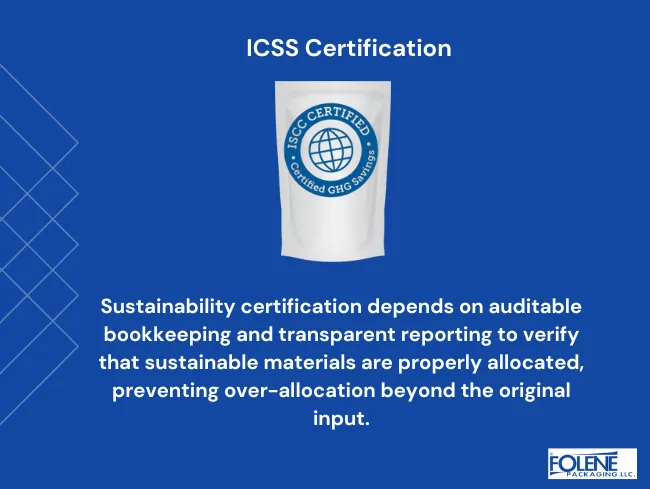
The chain of custody is a critical component of the mass balance approach, ensuring that sustainable materials are accurately tracked and allocated throughout the entire supply chain. Certification schemes, such as ISCC, provide a structured framework that enables companies to demonstrate compliance with sustainable practices and make credible sustainability claims. Central to this process is third-party certification, which guarantees the integrity of the mass balance approach and offers assurance to stakeholders. The method depends on auditable bookkeeping and transparent reporting to verify that sustainable materials are properly allocated, preventing over-allocation beyond the original input. These certification schemes not only uphold the credibility of sustainability claims but also support the advancement of sustainable practices within the chemical industry, fostering growth and innovation.
The Balance Approach and Its Advantages
The mass balance approach offers several advantages by enabling the allocation of sustainable materials to finished products, thereby allowing companies to make credible sustainability claims. This method supports the development of bio-based materials and helps reduce reliance on finite fossil resources, demonstrating a company’s commitment to sustainable practices and lowering its carbon footprint. Its flexibility allows application across various industries and processes, facilitating the transition to a more circular economy. By adopting the mass balance approach, companies can drive innovation and growth while minimizing their environmental impact, ultimately contributing to a more sustainable future.
Chemical Recycling and Its Role
Chemical recycling plays a vital role in the circular economy by enabling the recovery of valuable materials from waste, thereby supporting sustainability efforts and reducing environmental impact. The mass balance approach facilitates the allocation of these recycled materials to finished products, allowing companies to make credible sustainability claims and demonstrate their commitment to waste reduction and circular practices. By integrating chemical recycling with the mass balance method, the chemical industry can drive innovation and growth while promoting a more sustainable future through responsible resource management and minimized waste.