Key Outcomes from the Global Plastic Treaty Talks: What’s Next?
Global Plastic Treaty Background
The global plastics treaty talks aimed to address the growing issue of plastic pollution and plastics production worldwide. These talks, which resumed from August 5 to 15, 2025, in Geneva, represented a crucial step toward creating a legally binding instrument to end plastic pollution and promote responsible consumption. The treaty process involved extensive international cooperation and negotiation among countries to reach a strong agreement on plastic waste management and reduction. The goal of the treaty was to reduce plastic pollution and promote a circular economy through improved recycling and sustainable waste management practices.
However, despite the high expectations and the historic opportunity for countries to come together and address the global plastic waste issue, the latest Geneva talks concluded without any clear-cut agreements or finalized wording for an international policy concerning plastic pollution. Folene Packaging breaks down the key takeaways from INC-5.2 global plastic treaty talks.
History and Objectives
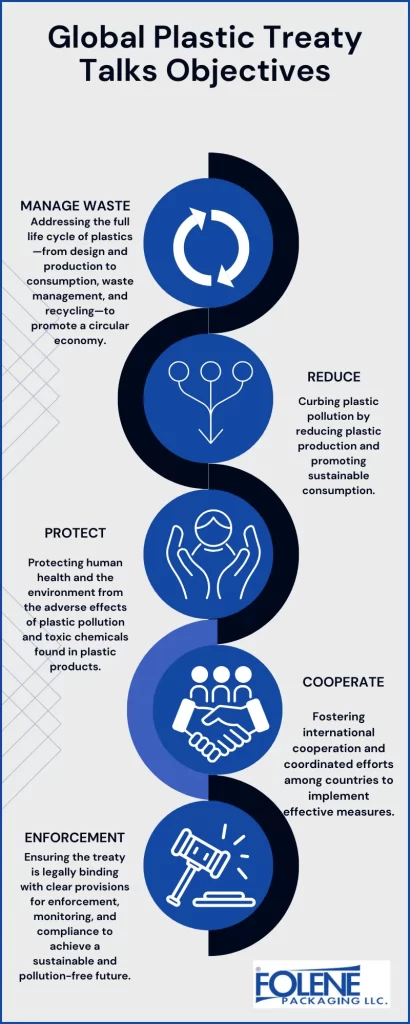
In 2022, the UN Environment Assembly adopted a historic resolution to establish a legally binding treaty aimed at ending plastic pollution globally. This treaty, developed under the mandate of the UN Environment Programme, aims to establish an international, legally binding instrument that addresses plastic pollution across all environments, including marine ecosystems. The key objectives of the treaty include:
Addressing the full life cycle of plastics—from design and production to consumption, waste management, and recycling—to promote a circular economy.
Curbing plastic pollution by reducing plastic production and promoting sustainable consumption.
Protecting human health and the environment from the adverse effects of plastic pollution and toxic chemicals found in plastic products.
Fostering international cooperation and coordinated efforts among countries to implement effective measures.
Ensuring the treaty is legally binding with clear provisions for enforcement, monitoring, and compliance to achieve a sustainable and pollution-free future.
Timeline of the Global Plastic Treaty Talks
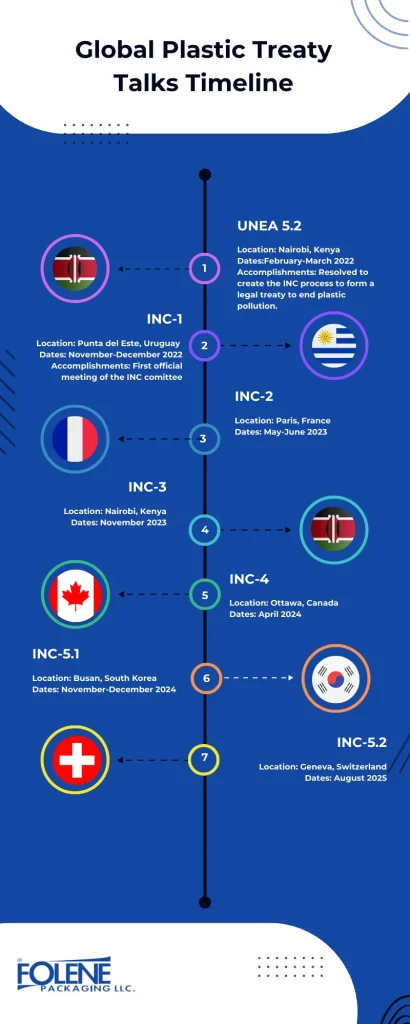
The journey toward a global plastics treaty has been marked by several key negotiation sessions held in different locations, each contributing to the ongoing development of an international legally binding instrument aimed at ending plastic pollution.
2022: UN Environment Assembly, Nairobi, Kenya
The process began with a historic resolution adopted at the 5th session of the UN Environment Assembly. This resolution mandated the creation of a legally binding treaty to address plastic pollution across its full life cycle, including marine environments. It set the foundation for the treaty talks and established the International Negotiating Committee (INC) tasked with developing the treaty text.2023-2024: Multiple INC Sessions
Following the resolution, the INC convened multiple sessions to draft and negotiate treaty provisions. These meetings involved extensive discussions on the scope, ambition, and mechanisms of the treaty, including addressing plastic production, waste management, toxic chemicals, and financing. Notably, the fifth session was held in Busan, South Korea, in 2024, where negotiations aimed to finalize the treaty text but ended without consensus on key issues.August 5-15, 2025: INC-5.2, Geneva, Switzerland
The most recent and final round of negotiations, known as INC-5.2, took place in Geneva. This session sought to resolve remaining disagreements and adopt a strong, legally binding treaty text. Despite significant participation from over 180 countries, including ministers and high-level representatives, the talks concluded without agreement due to persistent disputes over plastic production limits, financing, and enforcement mechanisms.
Throughout these sessions, the treaty talks have aimed to establish binding global rules to reduce plastic pollution, promote a circular economy, and protect human health and the environment. While progress has been made on many fronts, the timeline reflects ongoing challenges in achieving consensus among diverse stakeholders and balancing economic, environmental, and social priorities.
Future negotiations remain anticipated, with the international community committed to continuing efforts to reach an effective treaty that can curb plastic pollution worldwide.
The Impact of Plastic Waste
Plastic pollution is a major driver of environmental degradation and climate change, severely impacting marine environments and posing growing concerns for human health. The world’s oceans are inundated with plastic waste, which has been linked to numerous health problems, including cancer, infertility, and cardiovascular disease. Beyond its environmental and health consequences, plastic pollution also imposes significant economic costs, with estimates suggesting it costs the global economy billions of dollars annually. Given these profound impacts, addressing plastic pollution through a comprehensive global plastics treaty is essential to safeguard both the planet and human well-being.
The Role of Production and Consumption
Plastic production is a major contributor to plastic pollution, particularly the production of single-use plastics, which poses a significant problem worldwide. Consumption of plastic products further drives plastic waste, especially in many countries that lack effective waste management systems. The treaty aims to tackle these issues by promoting sustainable production and consumption practices to reduce plastic waste. However, the influence of fossil fuel interests, particularly from oil-producing states, presents a substantial challenge, as many oppose ambitious treaty measures. To effectively curb plastic pollution, the treaty must comprehensively address both plastic production and consumption, balancing environmental goals with the complex economic and political realities involved.
Human Health Considerations
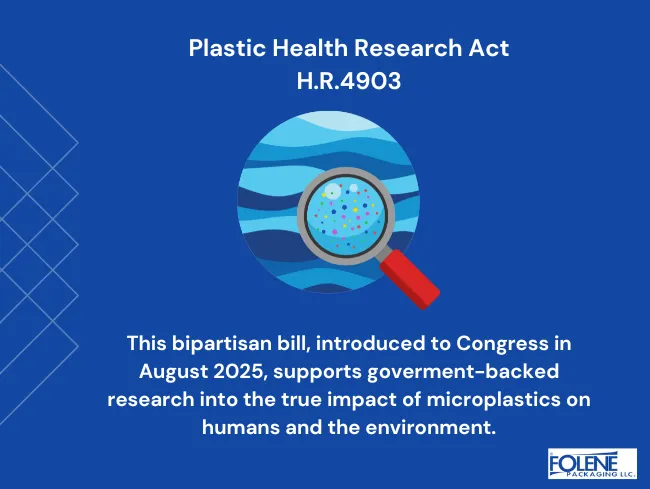
Human health is a critical consideration in the global plastics treaty talks, as plastic pollution, and particularly microplastics, has been linked to various serious health problems. The treaty must address the presence of toxic chemicals in plastic products and the broader impact of plastic pollution on human well-being. The World Health Organization has emphasized the urgent need for action to mitigate these health risks. Consequently, the treaty should prioritize human health and promote sustainable practices aimed at reducing plastic pollution. Given the significant health impacts associated with plastic pollution, it is essential that these issues are comprehensively addressed through a robust global plastics treaty.
Challenges and Obstacles
The treaty talks faced numerous challenges and obstacles, notably opposition from oil states and fossil fuel interests, which complicated efforts to address the root causes of plastic pollution related to production and consumption. Balancing the diverse needs of countries and stakeholders—including environmental groups and civil society—proved difficult, as reaching consensus required strong leadership and skilled negotiation. Despite these significant hurdles, the potential benefits of a global plastics treaty underscore the importance of continuing the treaty process with determination and collaboration.
Next Steps for the Treaty
The next steps for the treaty involve continuing the negotiation process to address outstanding issues, with a strong emphasis on prioritizing human health and environmental protection. Central to these efforts is fostering international cooperation and coordination to effectively tackle the global plastic waste problem. To ensure meaningful progress, the treaty must be legally binding and enforceable, incorporating clear provisions and mechanisms for implementation, verification, and consequences for non-compliance. Achieving these goals will require strong leadership and unwavering commitment from countries worldwide to reduce plastic pollution and promote sustainable practices.
Folene Packaging’s Commitment to Sustainable Solutions
Folene Packaging is dedicated to addressing the urgent global plastic pollution problem by offering environmentally friendly packaging materials that provide more immediate and practical solutions. Their innovative products, such as Ecolene AP-XPCR and Ecolene AP-XEC, are designed to be both recyclable and biodegradable, significantly reducing the environmental footprint of plastic packaging.
Ecolene AP-XPCR utilizes advanced post-consumer recycled content, promoting higher global recycling rates and supporting a circular economy by turning plastic waste back into valuable resources. Meanwhile, Ecolene AP-XEC is engineered to biodegrade under specific conditions, helping to minimize plastic accumulation in natural environments and reduce harm to ecosystems.
By integrating these sustainable materials into their product offerings, Folene Packaging not only aligns with the goals of the global plastics treaty talks but also provides businesses and consumers with responsible alternatives that help curb plastic pollution immediately. Their commitment exemplifies how industry players can contribute to global action against plastic waste while fostering innovation and environmental stewardship.
Folene Packaging’s experts are ready to help businesses like yours find the perfect sustainable packaging solution. Contact Folene Packaging today to learn more about how our high performance recyclable and biodegradable packaging materials can support your packaging needs as well as your sustainability goals and contribute to a cleaner planet.